In short
Crown lengthening is a gum procedure under local anaesthetic that exposes more tooth by repositioning the gum and, where needed, recontouring the bone beneath it. It can save a tooth that is broken down to the gumline, or make short-looking front teeth look more proportionate. Gums usually need six to twelve weeks to settle before a final crown on a back tooth, and often three to six months for front teeth and aesthetic cases.
Why might I need crown lengthening?
Functional crown lengthening is for a tooth that has broken or decayed down to or below the gum, leaving too little tooth above the gum for a crown to last. Exposing more tooth can make the difference between keeping the tooth and losing it.
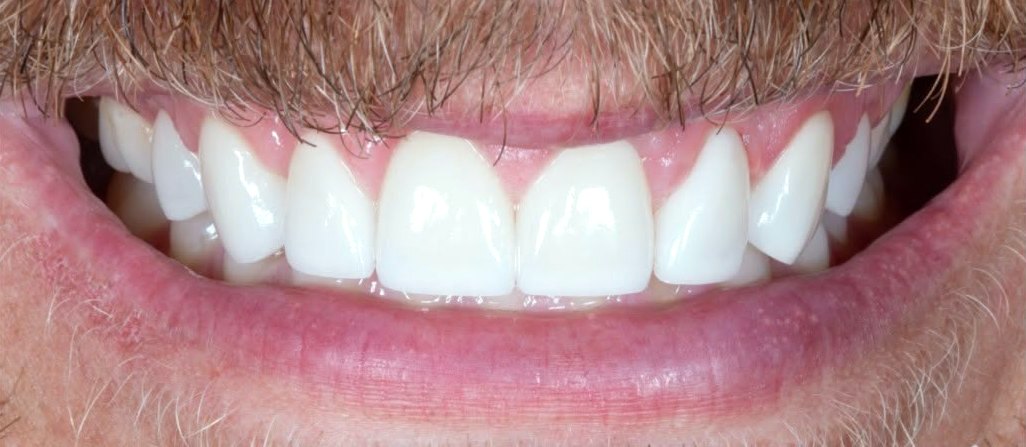
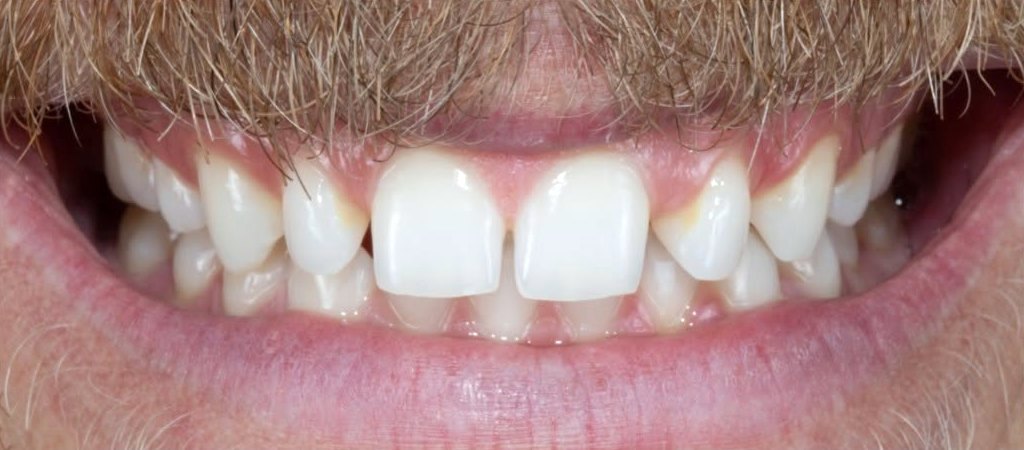
Aesthetic crown lengthening is for a gummy smile or teeth that look short because the gum covers too much of them. It is often planned alongside veneers or crowns so the gum line and the teeth are designed together.
Why can’t the crown just be fitted?
The gum attaches to a tooth in a narrow band just above the bone. If the edge of a crown pushes into that band, the gum stays inflamed, bleeds and can recede unpredictably, and bone can be lost. A crown also needs enough sound tooth above the gum to grip; without it, it is more likely to come off or the tooth to break.
Crown lengthening moves the gum, and the bone beneath it, so there is enough tooth for the crown to hold on to with a healthy gum seal around it. For a gummy smile, reshaping the bone as well as the gum keeps the new gum line stable; trimming the gum alone tends to let it grow back.
Who needs crown lengthening?
- A tooth broken or decayed near the gumline that your dentist wants to crown
- Uneven gum levels across the front teeth
- Short-looking teeth or a gummy smile caused by excess gum
- Smile makeovers where the gum line is part of the design
A gummy smile caused by a short or very active upper lip, or by the jaw position, is not treated by crown lengthening alone, so the cause is assessed first.
How crown lengthening is done
- Planning. For a broken tooth, I review the X-rays and your dentist’s referral and confirm the tooth can be restored. For a gummy smile, photographs and measurements are taken and the new gum line is designed, often with a mock-up or digital smile design, and a surgical guide is made if needed.
- The procedure. Under local anaesthetic, small incisions are made along the gum line, working under a dental microscope, and the gum is gently lifted. A small amount of bone is reshaped, so there is a healthy space between the new gum edge and the bone, and the gum is stitched in its new position. For a broken tooth, the temporary crown stays in place or is replaced.
- How long it takes. About 45 to 60 minutes for a single tooth. Gummy-smile treatment across several teeth takes from 30 minutes to two hours.
- Review. About a week to ten days later the stitches come out and I check how the gum is settling.
- Final teeth. Crowns or veneers are made once the gum has settled, by your own dentist or, at Bridge in Derby, by me.
Healing and your final crown
- The first day. Feeling comes back over the afternoon. Holding something cold against your lip or cheek helps limit swelling.
- Days one to three. Expect mild swelling and tenderness, eased by paracetamol or ibuprofen. Eat soft, cool food and chew on the other side. Rinse with warm salt water or the mouthwash recommended, and do not brush the stitches.
- The first week. Many people feel ready for work within a day or two, depending on how many teeth were treated. After gummy-smile treatment the gums look swollen for a few days, and most people feel presentable within a week, so avoid planning it within two or three weeks of a big event.
- Seven to ten days. The stitches come out and you can start brushing the area gently again.
- The following months. The gum settles before the final crown or veneers: six to twelve weeks at the back, three to six months at the front. After gummy-smile treatment the gum line keeps refining for up to 18 to 24 months.
Before the procedure, have a light meal, tell me about any medicines, especially blood thinners, and bring any referral letter and X-rays from your dentist.
What are the risks?
Possible effects include tenderness, bleeding, infection, sensitivity of the exposed root, small dark triangles between teeth, and some gum rebound, where the gum creeps back over time. For functional cases the tooth can end up looking slightly longer than its neighbours, and a tooth with a short root may become less well supported. I explain whether the tooth is a good candidate before we start.
Is there an alternative to crown lengthening?
- Crowning without lengthening: quicker, but a crown with too little tooth to grip, or edges deep under the gum, is more likely to fail or cause gum problems.
- Orthodontic extrusion: braces gently pull the tooth up out of the bone. It avoids surgery on neighbouring teeth but takes longer.
- Extraction and an implant: sometimes the better long-term choice for a tooth with little root left.
- For a gummy smile: lip-related causes may be addressed with other treatments, and jaw-related causes with orthodontics or jaw surgery.
Where can I have crown lengthening?
I provide crown lengthening at Bridge Dental & Implant Clinic, 415 Burton Road, Derby DE23 6AN, and at Parklands Dental Care, 248 Trowell Road, Wollaton, Nottingham NG8 2DS. You can request a consultation directly; you do not need a referral.