In short
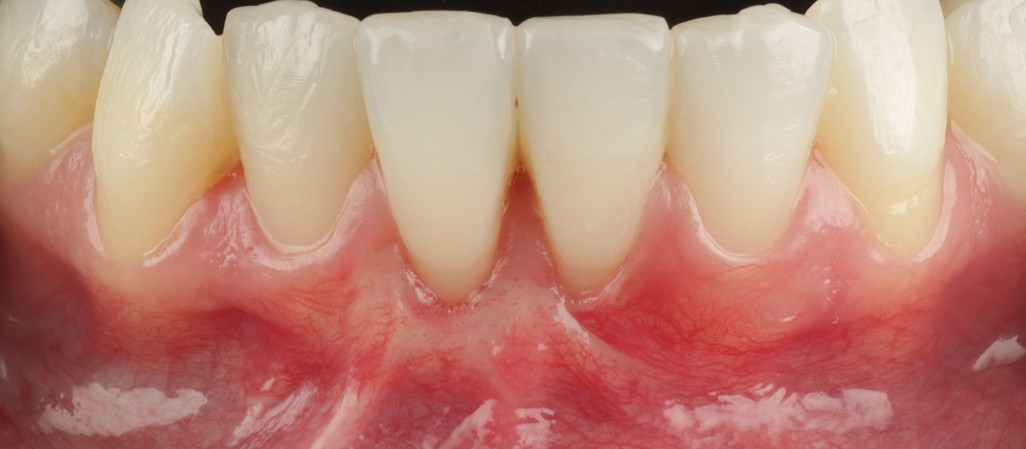
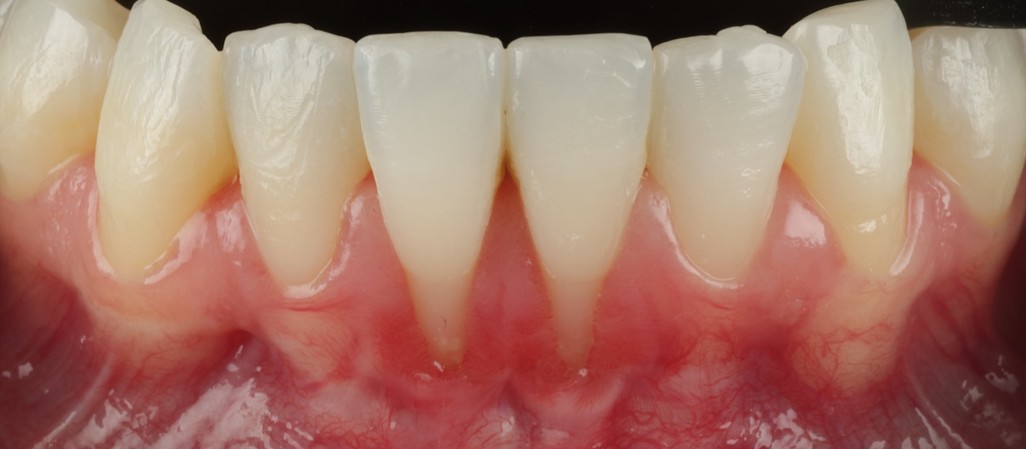
A gum graft moves a small piece of tissue, usually from the roof of your mouth, to an area where the gum has receded or is too thin. It is done under local anaesthetic. The graft surface heals in about two weeks, the palate can take two to four, and the gum keeps maturing for several months. How much root can be covered depends mainly on how much bone and gum remain between the teeth, which I assess before recommending it.
Why do gums recede?
Common causes are thin gum and bone you are born with, brushing too hard, past gum disease, orthodontic tooth movement, tongue or lip piercings and a tight muscle attachment (frenum) pulling on the gum. Finding the cause matters, because a graft will not last if the cause continues.
Why treat receding gums?
Recession is not only about appearance. Exposed root surfaces are softer than enamel, so they wear and decay more easily and are often sensitive to cold. Thin gum is fragile: it is easily damaged by brushing and tends to keep receding.
A graft thickens the gum, which protects the root and makes the area more resistant to further recession. In suitable cases it covers the exposed root as well, which can ease sensitivity and improve how the teeth look.
Who is a gum graft for?
- Roots that are exposed and sensitive
- Recession that is getting worse over time
- Thin, fragile gum that is hard to brush without discomfort
- Teeth that look longer than you would like, especially at the front
- Thin gum around an implant, or before orthodontics or crowns
Gum disease needs to be stable first, and smoking reduces the chance of success.
What are the types of gum graft?
- Connective tissue graftTissue from under the surface of the palate is tucked beneath the gum to cover roots and add thickness. Often used where appearance matters. In some cases it is placed through a small tunnel without cutting the gum between the teeth.
- Free gingival graftA thin layer of tissue from the surface of the palate is placed to create a band of firm gum. Mainly used to stop recession progressing and make cleaning comfortable, rather than for appearance.
- FrenectomyReleasing a tight muscle attachment, either at the same time or as a first stage at least six weeks before the graft.
In some cases a collagen matrix can be used instead of tissue from the palate, which avoids a second sore area. Whether it suits you depends on the area being treated and how much thickness is needed.
What happens during a gum graft?
- Numbing. Local anaesthetic numbs the teeth being treated, and the roof of the mouth if tissue is taken from there.
- Preparing the site. Around the receding teeth, the gum is either gently lifted or loosened through a small tunnel, without cutting the gum between the teeth where possible.
- Taking the graft. For a connective tissue graft, a thin layer is taken from under the surface of the palate and the palate is closed with stitches. For a free gingival graft, a thin surface layer is taken, which heals like a graze.
- Placing it. Under the microscope, the graft is positioned over the root and held with very fine stitches, which are removed after seven to ten days.
- Protecting the palate. A thin protective plate, made beforehand, is worn over the roof of the mouth for about a week.
The appointment takes from 45 minutes to two and a half hours, depending on the type of graft and how many teeth are treated.
Healing after a gum graft
- The day of the graft. Your lip and palate stay numb into the afternoon. Keep the palate plate in, prop yourself up on an extra pillow, and hold a cold pack against your cheek in short spells. A little oozing from the palate is normal; press on it with damp gauze.
- Days one to three. Swelling and bruising are usually at their most noticeable now and can look dramatic, especially for lower front teeth, but they settle. The palate is often the more tender site, and simple painkillers with soft, cool food such as yoghurt or soup keep most people comfortable.
- The first week. Keep wearing the plate as advised. Do not brush the graft or pull your lip to look at it; rinse gently with warm salt water or the mouthwash recommended instead. Do not smoke. Office work is usually fine after a day or two; leave heavy lifting and the gym for a week.
- Seven to ten days. The stitches are removed and healing is checked.
- Two weeks. You start very gentle brushing of the graft with a soft brush, using the technique I show you.
- Three to six months. The result is assessed. The gum keeps maturing and blending in for up to two years.
Before your graft, have a light meal, stock up on soft foods and plan a day or two off. Stopping smoking makes the biggest difference to how well a graft takes. Avoid planning it just before a big event, as bruising can show for a week or so.
What are the risks?
Possible effects include pain and swelling, bleeding from the palate, infection, and the graft not taking fully, in which case coverage may be partial. The colour of the grafted gum can differ slightly from the surrounding gum. Smoking and poor healing increase these risks. Full root coverage cannot be promised; I will tell you what is realistic for your teeth.
What are the alternatives to a gum graft?
- Monitoring: mild, stable recession that does not bother you can often just be watched, with brushing advice.
- Desensitising products or a bonded filling: can ease sensitivity or cover a notch on the root, but do not add gum.
- Gum-coloured veneer or composite: can disguise long teeth in some cases, without surgery.
- A gum graft: the main option that adds gum tissue and can cover the root.
Where can I have a gum graft?
I provide gum grafts at Parklands Dental Care, 248 Trowell Road, Wollaton, Nottingham NG8 2DS, and at Bridge Dental & Implant Clinic, 415 Burton Road, Derby DE23 6AN. You can request a consultation directly; you do not need a referral.