In short
Gum disease treatment is a thorough clean below the gumline, under local anaesthetic, to remove the bacteria and hardened deposits that cause inflammation, followed by a review about three months later. Most people need two to four treatment visits of between 30 minutes and two hours. It cannot reverse bone that has already been lost, but it aims to stop the disease progressing and keep your teeth for the long term.
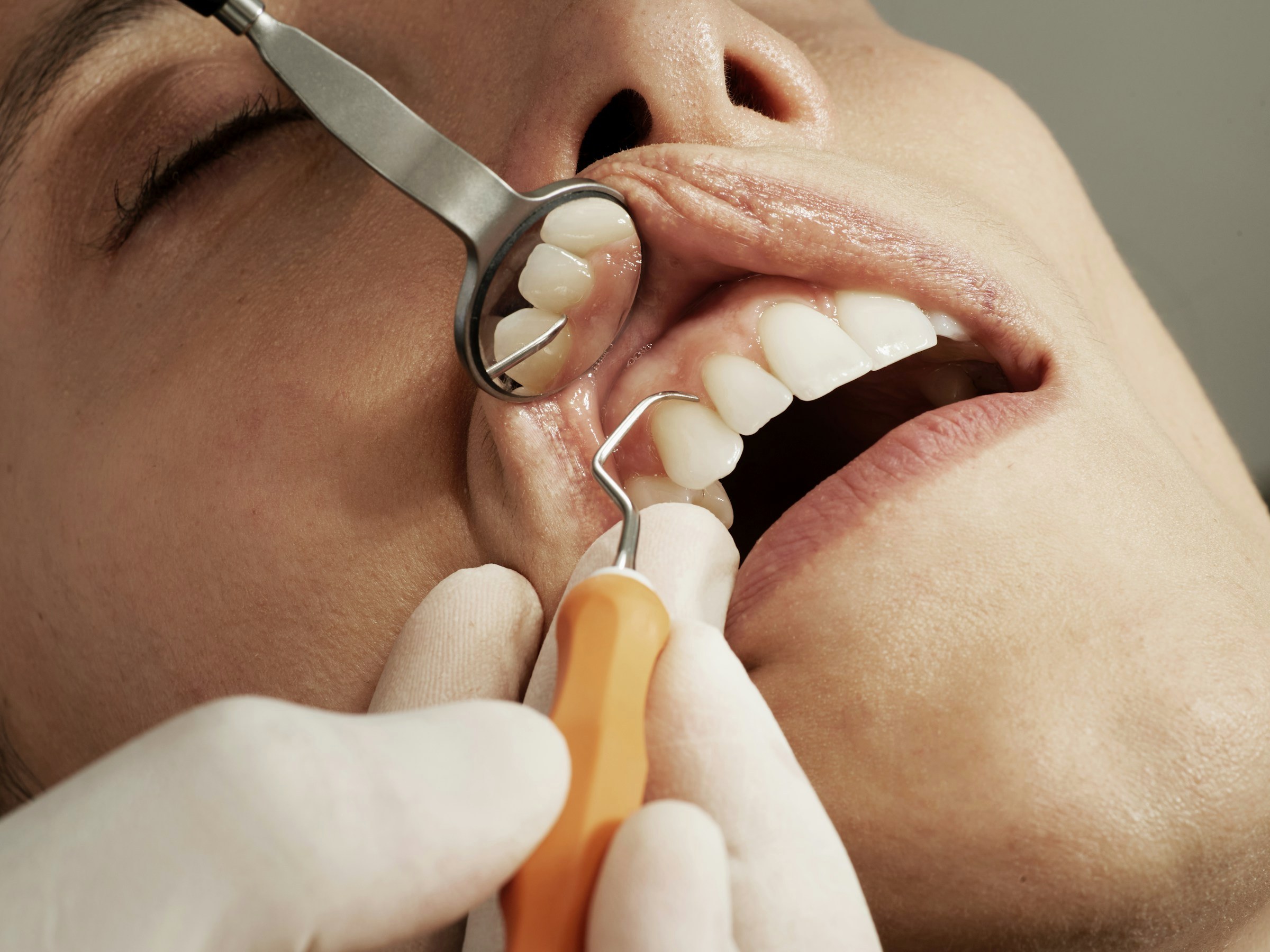
What is gum disease?
Gum disease is inflammation caused by bacteria building up where the gum meets the tooth. In its early form, gingivitis, the gums bleed and look red or swollen, and it can be reversed with better cleaning. If it continues, it can become periodontitis: the gum and the bone holding the teeth are slowly lost, pockets form between gum and tooth, and eventually teeth can loosen.
Smoking, diabetes, stress, family history and some medicines all increase the risk. Many people have no pain at all, which is why it is often found late.
Why is a deep clean needed?
Once the gum has come away from the tooth to form a deep pocket, a toothbrush, floss and even a routine scale and polish cannot reach the bottom of it. Bacteria living there form a sticky film and hardened deposits (calculus, or tartar) on the root, and your body’s reaction to them is what slowly destroys the gum and bone.
Deep cleaning removes those deposits, the bacterial film and the inflamed tissue lining the pocket, so the gum can heal and tighten against a clean root. Your daily cleaning then stops the bacteria building up again, which is why the home-care part of treatment matters as much as the cleaning itself.
Who is gum disease treatment for?
- Gums that bleed when you brush or floss
- Bad breath or a bad taste that keeps coming back
- Gums that have shrunk back, or teeth that look longer
- Teeth that have moved, spaced out or feel loose
- Your dentist or hygienist has mentioned “pockets” or bone loss
- You are planning implants, veneers or crowns and want the foundations checked first
Your treatment, step by step
- Assessment. I measure the gum around every tooth (charting), take X-rays where needed and explain what I find, in plain language.
- Home-care plan. Most of the long-term result depends on daily cleaning, so I show you exactly which brushes and interdental brushes suit your mouth.
- Deep cleaning. Under local anaesthetic, the roots are cleaned below the gumline, usually over two to four visits.
- Re-evaluation. About three months later the gums are measured again to see how they have responded.
- Further treatment if needed. Deep pockets that remain may need gum surgery, sometimes with regenerative materials such as Emdogain®. Most people do not.
- Maintenance. Regular visits keep the disease stable. Gum disease can come back if cleaning or maintenance lapses.
What happens during a deep-cleaning visit?
Each area is numbed first, as for a filling. Working under magnification, I then clean every root surface below the gum with ultrasonic and hand instruments shaped to follow the root, removing the deposits and the inflamed tissue lining each pocket. Where it helps, a laser may be used as well.
A visit takes between 30 minutes and two hours, depending on how many teeth are treated, and you can stop for a break at any point. Before you leave, we go over your cleaning routine again, because the next few weeks of home care shape how well the gums heal.
Recovery after deep cleaning
- The first few hours. Numbness lasts two to four hours, so avoid hot drinks and chewing until it wears off. Slight oozing is normal, and gentle pressure with damp gauze stops it.
- The first one to three days. The gums can be tender. Paracetamol or ibuprofen is usually enough. Brush gently with a soft brush, restart your interdental brushes the next day, and use warm salt-water rinses after the first 24 hours.
- The next few weeks. Teeth can be sensitive to cold, and a sensitivity toothpaste helps. As the gums heal they tighten, so teeth can look slightly longer and small gaps may appear between them. This is the gum becoming healthier.
- At three months. Your gums are measured again. This shows how much each pocket has improved and whether any area needs more treatment.
Before each visit, eat as normal and take your usual medicines. Tell me if you take blood thinners or bone medicines, or if you have diabetes or are pregnant, and bring your interdental brushes.
What are the risks?
Treatment is low risk. The common effects are temporary tenderness, sensitivity to cold and some gum shrinkage as inflammation settles. Rarely, a tooth that has already lost a lot of support may still be lost. Results depend heavily on daily cleaning and on factors such as smoking and diabetes control, so I cannot promise an outcome, but I will explain your own risks at assessment.
What are the alternatives to deep cleaning?
- Doing nothing: periodontitis does not usually settle on its own and tends to progress slowly, with more bone loss over time.
- A routine scale and polish: cleans above the gumline. It is not enough for pockets below the gum.
- Antibiotics alone: do not remove the hardened deposits on the roots. They are occasionally used alongside cleaning in specific cases, not instead of it.
- Extraction and replacement: sometimes the right choice for a tooth that cannot be saved, but implants also need healthy gums, so the disease is treated first either way.
Where can I have gum disease treatment?
I provide gum disease treatment at Bridge Dental & Implant Clinic, 415 Burton Road, Derby DE23 6AN, and at Parklands Dental Care, 248 Trowell Road, Wollaton, Nottingham NG8 2DS. You can request a consultation directly; you do not need a referral.